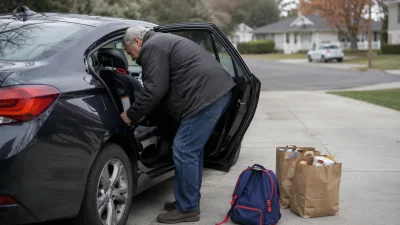
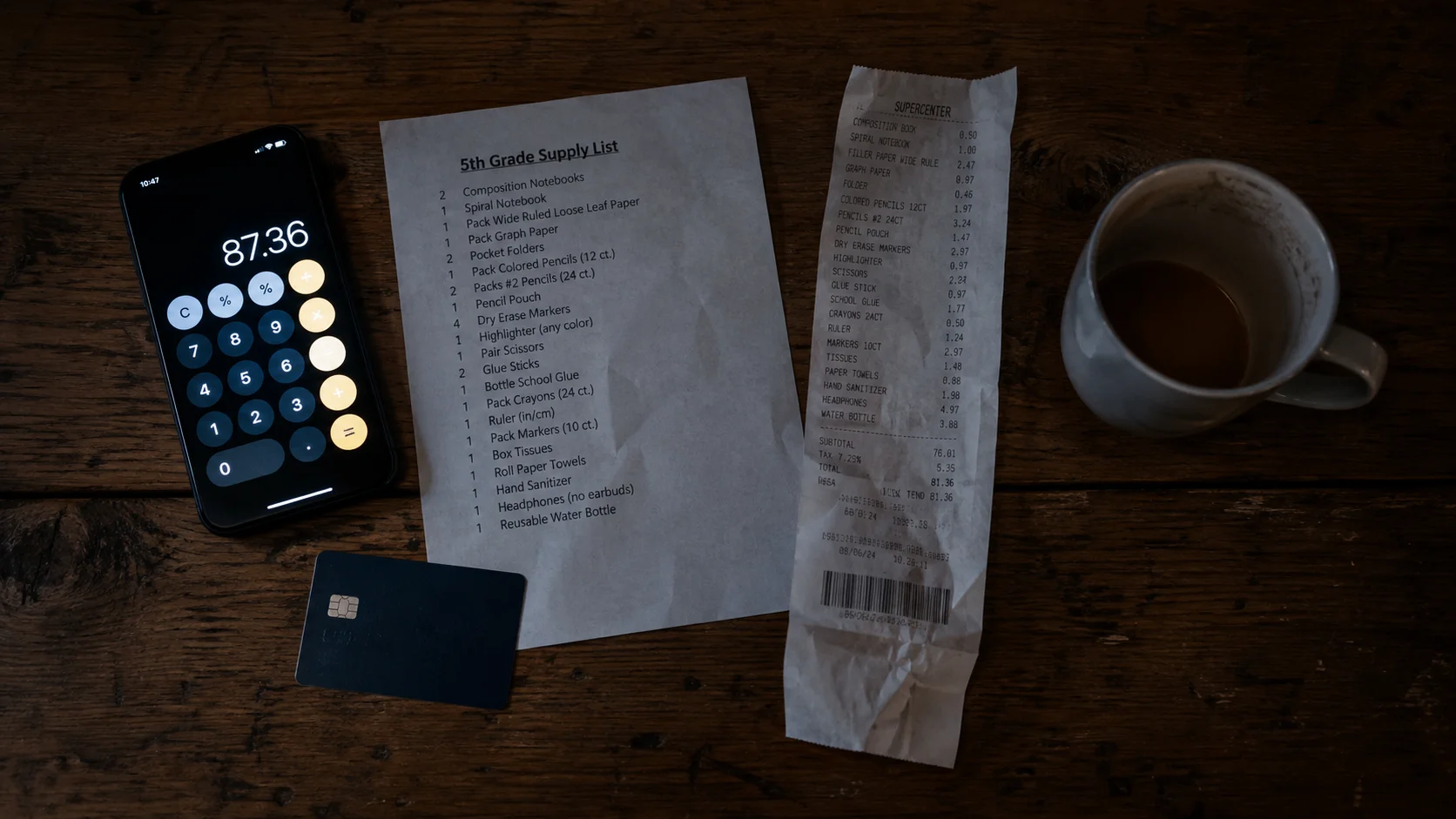
The list comes home in a plastic folder, the way it always does. Two composition notebooks. A pack of dry erase markers. The specific brand of tissues the classroom prefers, which is never the brand on sale. Nothing on the list costs very much, and that is exactly the trick of it. No single line item has ever bankrupted a household. Yet by the third week of August, a lot of families in this country are quietly deciding which card to put it on.
Here is the number that should reframe the whole season. A survey released on August 4, 2026 by Accredited Debt Relief, fielded by Centiment among 1,052 parents and guardians of children in kindergarten through twelfth grade, found that 60 percent were already carrying back-to-school debt before this year's shopping had even started. More than a quarter owed at least a thousand dollars. Fifty-four percent said they were still paying off school expenses by the time holiday shopping arrived.
So the cycle does not begin in August. It begins in whatever month last year's balance stopped shrinking.
What the numbers actually say
Two things are happening at once, and they are easy to confuse. The first is straightforward inflation in school supply costs. An analysis published July 27, 2026 by The Century Foundation put the total at close to $4,000 per child for the school year, roughly 10.7 percent higher than the year before. A typical basket of supplies rose 7.7 percent. Notebook paper went up 20 percent. Lunch boxes jumped 26.8 percent. Tissues, the ones on the classroom list, rose 20 percent. The authors traced a large share of that to tariff costs moving down the supply chain, citing Newell Brands absorbing $174 million in tariff expense in 2025 and expecting another $130 million in 2026.
The second thing is not economic at all. It is social.
A separate survey published August 5, 2026 by Beyond Finance, conducted by Talker Research among 2,000 parents of children aged five to seventeen, found that 70 percent felt pressure to match what other families were buying. Sixty-one percent bought something specifically so their child would not feel left out. Fifty-four percent worried their kid would be judged for reusing last year's supplies. Thirty-nine percent expected to take on debt for the season. Fifteen percent had used a personal or payday loan. Eight percent said they had gambled to cover the cost.
That last figure is small. It is also the one worth staring at, because it tells you what kind of pressure this is. People do not gamble to buy pencils. They gamble to avoid a feeling.
"It's easy to make decisions that provide short-term relief but create long-term financial stress."
That is Dr. Erika Rasure, chief financial wellness advisor at Beyond Finance, describing the trade parents make in a checkout line. She frames it as a choice between a child's emotional well-being and a family's financial future, which is a clinical way of saying something most parents have felt without ever naming.
The part that has changed since your own childhood
Supply lists have always existed. What is new is the machinery sitting between wanting a thing and paying for it. Point-of-sale installment plans now appear on backpacks, sneakers, and $40 water bottles. The Accredited Debt Relief data found 53 percent of parents leaning on financing more than they did three years ago, and 26 percent describing that shift as significant. Among parents already carrying at least a thousand dollars of school debt, 75 percent reported leaning on financing more.
Buy now pay later is not a villain. Split into four payments, a $60 purchase feels like $15, and for a household with steady income and a short memory of the calendar, that is often fine. The problem is arithmetic that nobody performs at the register. Six of those plans running simultaneously in October is not six small conveniences. It is a fixed monthly obligation that arrived without anyone deciding to take on a fixed monthly obligation.
There is a strange optimism in the same data. Seventy percent of parents said they felt confident covering this year's costs without new debt, including 68 percent of the parents already a thousand dollars in. Confidence and cash flow are not the same instrument. One of them shows up on a statement.
What to do before the second week of September
The useful response is not a lecture about restraint. Most parents reading this already know how to be frugal. They are not overspending because they lack discipline. They are overspending because a nine-year-old came home and mentioned, once, without complaint, that everybody else has the folder with the character on it.
Start by separating the list into two columns before you shop, not while you shop. The teacher's list is a requirement. Everything adjacent to it, the branded version, the second pair of shoes, the fourth outfit, is a choice, and choices deserve a number attached before the store gets involved. Setting a hard ceiling per child converts a hundred small decisions into one decision you make while calm. That is the entire mechanism behind a working family budget, and it is the only part that reliably survives contact with a Target aisle.
Then look at what is already outstanding. If last year's balance is still open, this year's spending is not really this year's spending. Naming the existing number out loud, to yourself or to a partner, is unglamorous and it is the single step that most reduces parent financial stress, because unnamed debt behaves in the imagination like a much larger figure than it is on paper.
Bring the kid in, at the right altitude. A seven-year-old does not need to know the balance. A twelve-year-old can absolutely be handed a fixed amount and the authority to allocate it, which is teaching kids about money in the only way that has ever worked, by giving them a real constraint and letting them feel the trade. Families that already hold a short weekly check-in have an easy place to put this conversation. If yours does not, our guide to family meetings that actually work lays out a twenty minute version that does not require anyone to enjoy it.
Watch the quiet leakage too. The season's biggest costs are rarely the ones on the list. School lunches alone are projected above $3,800 for the year, up nearly $400. Spirit wear, field trips, the $6 breakfast bought because the morning fell apart. That pattern is the same one we traced in our reporting on how convenience spending drains family budgets, and it does more damage over ten months than any backpack does in one afternoon.
Build the plan around the calendar, not the aisle
A school spending plan that only covers August is a plan that fails in October, which is when picture day, the first field trip, and the fall sports fee all arrive within about eleven days of each other. Map the known dates now. Districts publish most of them. Then divide the total by the number of paychecks between now and then, which is a duller exercise than shopping and the only one that protects household cash flow when the unglamorous costs land.
For New York families, the school tax bill lands in this same window, and our network partners at TheStandardNY built a realistic back-to-school budget breakdown that pairs well with this. They also published a plain explanation of what school taxes actually pay for, which is worth reading in the same sitting, because the two bills tend to arrive in the same mood.
The thing nobody puts in the survey
Thirty-nine percent of parents in the Beyond Finance data said the pressure peaks before school even starts. Not during. Before. The anxiety is anticipatory, built entirely out of an imagined first day in which your child is visibly the one who did not get the thing.
That day almost never happens the way it plays in a parent's head. Kids notice each other's stuff for roughly a week. What they carry considerably longer is the household temperature during the month their parents were deciding what to buy. A calm August with a modest back-to-school shopping haul reads, to a child, as a family that is fine. A lavish August spent in visible tension reads as a family that is not.
Seventy-four percent of parents in that survey said they feel guilty when they cannot buy everything their child wants. Sixty-nine percent said they would feel like a failure. Those two numbers are the actual product being sold every August, and no line item on the teacher's list addresses them.
The notebooks will be fine. Buy the cheap ones.