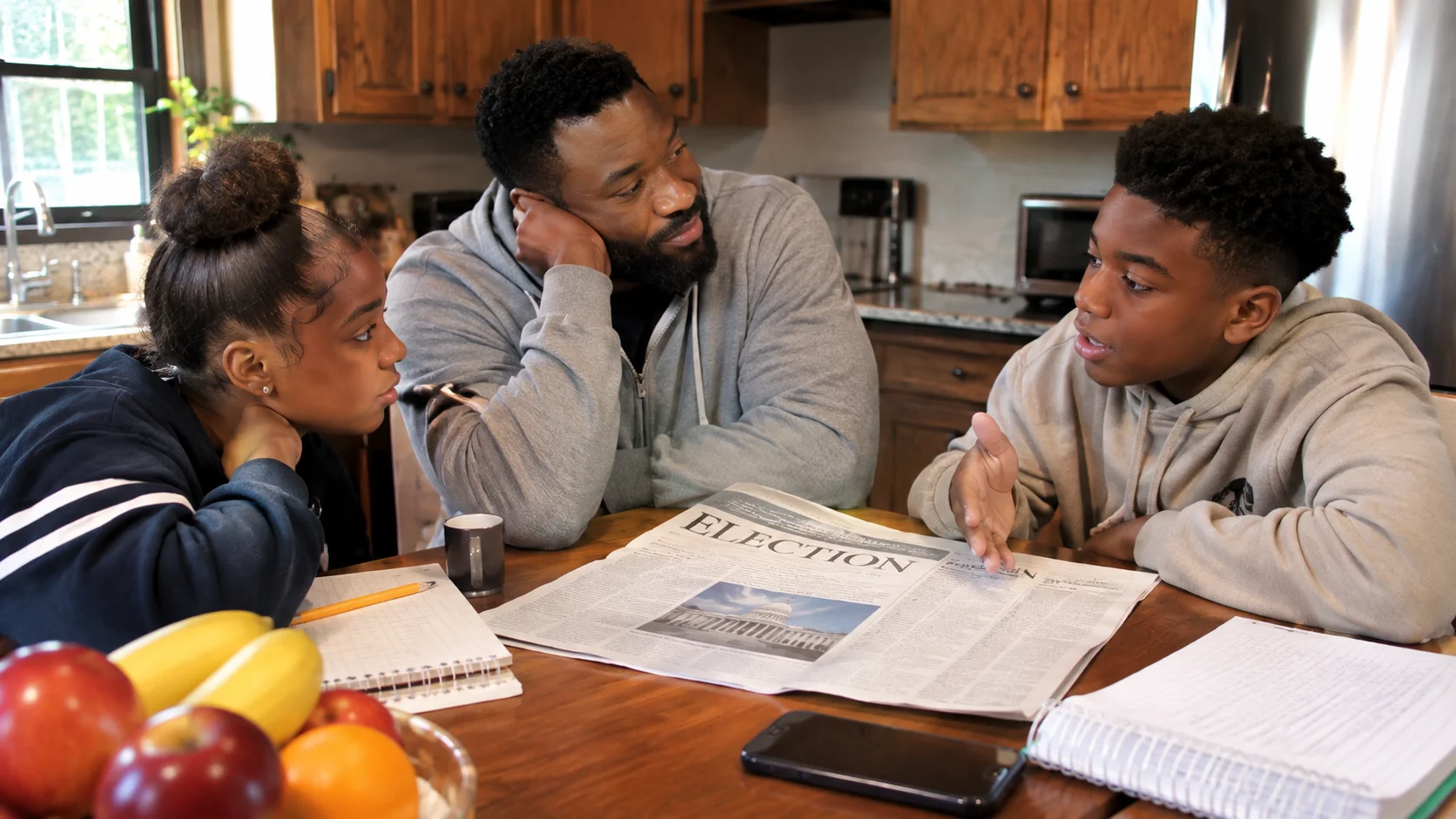
The 2026 election cycle may feel impossible to avoid. Children can overhear adult conversations, see dramatic headlines, and pick up on tension at home, school, or online. Their questions may be simple, serious, funny, or all three at once.
You do not need to have a perfect answer to help your child. What matters most is offering a steady, honest presence. This is a chance to teach media awareness, respectful disagreement, and civic participation while helping your child feel safe and loved.
This article offers general parenting information, not medical or mental health advice. If your child's worry is intense, persistent, or affecting sleep, school, relationships, or daily life, consider speaking with their pediatrician or a qualified mental health professional.
Start by listening, not lecturing
Begin with a gentle, open question: "What have you heard about the election?" Then give your child time to answer. You may learn they are worried about something very different from what you expected.
Children often fill gaps in information with their own explanations. A calm conversation gives you an opportunity to correct misunderstandings without dismissing their feelings. You might say, "That sounds confusing," or, "I can see why that headline felt scary."
Responsive back-and-forth conversations are an important part of supportive adult-child relationships. The Center on the Developing Child at Harvard University explains how these everyday exchanges help build connection and resilience.
Match the conversation to your child's age
For younger children
Keep explanations brief and concrete. Young children usually do not need a detailed lesson on campaigns, polling, or political conflict. Focus on the basic idea: people vote to choose leaders, adults may have different opinions, and caring adults work to keep children safe.
Try: "An election is one way people help choose leaders. Grown-ups may disagree about who they choose, but we can still treat people respectfully."
For school-age children
Older children may ask about specific candidates, laws, or claims they have heard. Answer what you can in plain language, and it is okay to say, "I do not know. Let's look for a reliable source together." This models curiosity rather than certainty.
For teens
Teens may be forming strong opinions and may want to debate. Invite them to explain their reasoning, ask where they found information, and distinguish a fact from an opinion. You can share your values without requiring them to adopt every one of your views.
Keep adult stress from becoming your child's burden
Children notice more than words. They can hear a sharp tone, see a worried face, or sense when adults are repeatedly checking news alerts. That does not mean parents must hide every feeling. It means naming feelings in a reassuring way can help.
You could say, "I am feeling worried about some of the news, so I am taking a break from it. I am still here, and we are okay right now." This communicates both honesty and emotional regulation.
Try to avoid asking children to reassure you, repeatedly venting political fears around them, or suggesting that they are responsible for fixing adult problems. They deserve room to be children, even during a busy election season.
Create a calmer media plan
Election coverage can be fast, emotional, and repetitive. Limiting exposure is not the same as avoiding reality. It is a practical way to help children take in information at a pace they can manage.
The American Academy of Pediatrics offers guidance on media and children that emphasizes thoughtful media choices and conversations. During election season, families may find these steps useful:
- Turn off television news when young children are nearby, especially during upsetting breaking-news coverage.
- Choose one or two reliable sources to check at set times instead of scrolling continuously.
- Watch or read important news with older children when possible, so they can ask questions.
- Explain that clips, posts, and headlines may leave out context or be designed to provoke a strong reaction.
- Protect regular family rhythms, including meals, homework, play, movement, and sleep.
Teach respectful disagreement at home
Children learn about democracy not only from election results, but also from the way adults handle disagreement. You can show that people may care deeply about an issue and still speak without insults, stereotypes, or threats.
When sharing a political opinion, separate your values from claims that need evidence. For example: "I care a lot about this issue because I believe families need support." Then add, "Other people may see it differently, and we should check trustworthy information when we are deciding what is true."
If relatives or friends disagree during a gathering, it can help to set a family boundary ahead of time. A simple option is: "We can talk about this respectfully, but we will pause the conversation if it becomes hurtful."
Give children a sense of agency
Election news can make children feel that large events are happening beyond their control. Bring attention back to meaningful actions they can take in their own lives. Depending on their age, they might learn how voting works, help with a school service project, write a respectful letter about an issue they care about, or practice being a thoughtful community member.
Remind them that civic life is bigger than one news cycle. Listening, helping neighbors, learning about local needs, and treating others with dignity are all ways to participate in a community.
"You do not have to solve every question tonight. We can learn more, take breaks, and keep talking."
Know when your child may need extra support
Some worry is understandable when children encounter intense news. Consider reaching out for support if your child has ongoing nightmares, frequent physical complaints without a clear medical cause, major changes in mood, withdrawal from usual activities, or worry that interferes with daily routines.
The Centers for Disease Control and Prevention's child mental health resources can help families understand common concerns and ways to seek care. A pediatrician, school counselor, or licensed mental health professional can help you decide on appropriate next steps.
A steady message to return to
Children do not need parents to make the election feel unimportant. They need adults who can make room for questions, offer reliable information, and keep daily life grounded in care and routine.
A useful closing message is: "There are a lot of opinions and a lot of news right now. In this family, you can always ask questions. We will be kind, check facts, and take care of one another."