
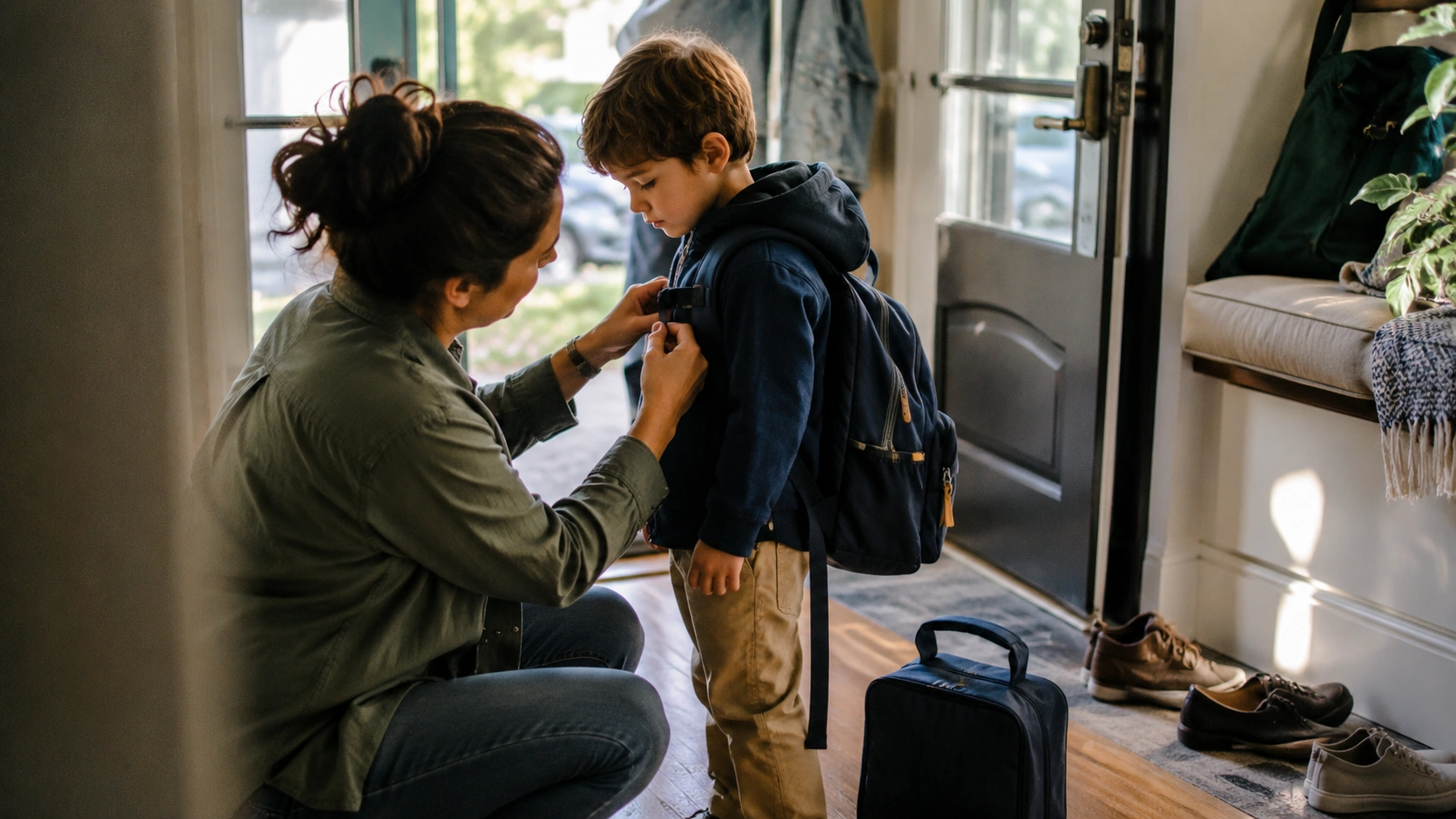
The phrase single-parent family is often spoken as if something is missing. The missing spouse. The missing second income. The missing second set of hands around the house, in the grocery aisle, at parent-teacher conferences, during fever season, and on the mornings when one shoe disappears as if swallowed by the house itself.
But that way of telling the story is too small. It measures the family by absence before it ever notices the architecture of presence. In many homes, one parent is doing the scheduling, earning, comforting, disciplining, cooking, advocating, remembering, repairing, and still finding a way to make the child feel held. That is not a broken family. That is a family running a demanding operation with fewer staff members and no closing shift.
The better question is not whether single-parent homes are whole. Many are deeply whole. The better question is whether the community around them is honest about what it takes to keep that wholeness protected.
Single-Parent Homes Are Not a Deficit Story
A single parent may be a mother, father, grandparent, guardian, foster parent, adoptive parent, sibling caregiver, or another adult who has become the stable center of a child’s life. Some families begin that way. Others arrive there through divorce, separation, death, incarceration, deployment, abandonment, migration, or a relationship that ended because peace became more important than appearances.
What these families often share is not weakness. It is compression. Time is compressed. Money is compressed. Patience is compressed. Recovery time is compressed. The parent who used to have a bad day still has to make dinner. The parent who is exhausted still has to check homework. The parent who is scared still has to sound calm enough for the child to sleep.
That daily compression matters. Research on single parent mental health has repeatedly connected single parenthood with higher risk of depression, stress, and emotional strain, often shaped by money, housing, work schedules, isolation, and limited social support. But research also points to something families already know: support changes the story. When single parents have reliable relationships, practical help, emotional care, and stable systems, their families can thrive.
The Load Is Not Just Emotional. It Is Logistical.
There is a kind of stress that comes from sadness, and there is another kind that comes from math. A bill is due on Friday. A child needs sneakers. The car needs work. The after-school program closes at six. The paycheck comes next week. The school sent three emails, one robocall, and a form that needs to be returned by tomorrow.
For many single-parent households, the hardest part is not love. Love is often abundant. The hard part is logistics without backup. The hard part is making one income stretch across a two-income economy. The hard part is being expected to attend every meeting, answer every message, solve every behavior concern, and still be emotionally available at the end of the day.
This is why telling single parents to “just practice self-care” can sound insulting when there is no childcare, no transportation, no paid leave, and no second adult to take over. Self-care is important, but a bubble bath cannot replace affordable childcare. Deep breathing cannot replace a living wage. A gratitude journal cannot replace someone trustworthy picking up the child when a meeting runs late.
Children Need Stability, Not a Perfect Family Shape
Children do not need a household that looks like a greeting card. They need a household that gives them safety, structure, affection, accountability, and belonging. Those ingredients can exist in many family forms.
A child in a single-parent home benefits when the adult in charge can provide predictable routines. Bedtime does not have to be fancy. Dinner does not have to be chef-level. The home does not have to look like an influencer’s kitchen. But children do need to know what happens next. They need to know who is picking them up, what the rules are, when homework gets done, how conflict is handled, and where they can go when their feelings become too large to carry alone.
That kind of family stability is not about perfection. It is about repetition. The same expectations. The same warmth. The same adult who returns after a hard conversation and says, “I love you, and we are still going to figure this out.”
Single parents often become masters of this kind of steady love. They learn which battles matter. They learn how to stretch a grocery list. They learn how to turn a car ride into counseling, a kitchen table into a homework center, and a bedtime routine into the day’s emotional reset.
The Village Has to Be More Than a Saying
People love to say, “It takes a village.” Then the village disappears when the parent needs a ride, a sitter, a reference, a meal, a lead on a job, or five minutes to cry without an audience.
A real family support system does not have to be large. It has to be reliable. One aunt who shows up every Tuesday matters. One neighbor who can be called in an emergency matters. One coach who notices a child is off matters. One teacher who communicates early and respectfully matters. One church, community center, school counselor, social worker, or trusted friend can become part of the scaffolding that keeps a family standing.
The point is not to rescue single parents as if they are helpless. The point is to stop treating independence as proof that help is unnecessary. Many single parents look strong because they have had no choice. Strength should be honored, not exploited.
What Support Actually Looks Like
Support should be practical, specific, and free of judgment. “Let me know if you need anything” sounds kind, but it often places more work on the parent who is already carrying everything. Better support sounds like, “I can pick him up from practice on Thursdays,” or “I made extra dinner,” or “Send me the school form and I’ll print it,” or “I can sit with the kids for one hour while you make calls.”
For schools, support means communicating clearly and early. It means not assuming a missed event equals a careless parent. It means offering flexible conference times, translating documents when needed, and recognizing that some parents are working during the exact hours school systems expect them to be available.
For employers, support means predictable scheduling, paid leave, and a workplace culture that understands caregiving as part of real life. For policymakers, support means childcare affordability, housing stability, mental health access, and economic policies that do not punish the parent who is already carrying the heavier load.
The Emotional Life of the Single Parent
Many single parents become fluent in silence. They do not always tell their children how scared they are. They do not always tell their friends how tired they are. They may not even tell themselves.
But parental mental health is family health. When the parent has nowhere to place their stress, the entire household feels the pressure. This does not mean parents must be cheerful all the time. Children do not need a parent who pretends to be fine. They need a parent who models healthy repair. “I had a hard day, but I am taking a breath.” “I raised my voice earlier, and I should not have.” “We are safe. I am figuring this out.”
Those sentences teach emotional regulation better than any poster on a wall. They show children that strength is not the absence of struggle. Strength is the ability to struggle without making the child responsible for the adult’s pain.
The Child Should Not Become the Co-Parent
In many single-parent homes, older children become helpful. They may watch siblings, help cook, translate documents, remind the parent about appointments, or take on more responsibility than their peers. Some responsibility can build confidence. Too much can quietly turn a child into another adult in the room.
The line matters. A child can help with chores. A child should not carry the parent’s loneliness. A child can learn responsibility. A child should not become the emotional partner. A child can understand that money is tight. A child should not be made to feel guilty for needing shoes, lunch money, or school supplies.
Healthy single-parent homes protect childhood even when life is demanding. They tell the child, “You are part of this family, but you are not responsible for holding it together.”
A Strong Home Can Still Need Help
One of the most damaging myths about single parents is that asking for help means the home is failing. In truth, asking for help is often a sign of wisdom. It is an act of prevention. It is how families stay healthy before crisis becomes the only language people understand.
Support might look like counseling, parent groups, mentorship, food assistance, childcare subsidies, after-school programs, school-based services, faith-based networks, or trusted family meetings. It might mean building a calendar with another adult. It might mean asking the school for a meeting before behavior escalates. It might mean telling a doctor, therapist, or community worker, “I am overwhelmed and I need support.”
There is dignity in that sentence. There is protection in it too.
What Children Remember
Children may not remember every bill that was paid late or every night their parent stayed up worrying. They may not know how many times the adult chose not to fall apart. But they remember being picked up. They remember who came to the concert. They remember who listened in the car. They remember who made a small apartment feel like a safe world. They remember who kept showing up.
That is the center of the story. Not absence. Not pity. Not the tired assumption that a family needs two adults to be legitimate.
Single parents are not building half homes. Many are building whole homes with half the backup, and the rest of us should be honest enough to call that what it is: work, love, leadership, and community responsibility.