
Every year on the Tuesday after Thanksgiving, inboxes fill with appeals from food banks, animal shelters, school foundations and disaster funds, and most families scroll past them between work emails and Cyber Monday receipts. A smaller number of households use the day differently, sitting down with their children to choose a cause, pool some money or a Saturday morning, and talk through why that cause matters to them.
That second approach has research behind it, and GivingTuesday 2026 falls on Tuesday, Dec. 1, which leaves families a little more than a week to prepare. The most useful step a parent can take is a short family conversation about giving, with children helping choose where the money or time goes before everyone follows through together.
A 2013 study from Indiana University found that children whose parents talk with them about giving are 20 percent more likely to give to charity than children whose parents never raise the subject. The planning that puts that finding to work takes about an hour, spread across this weekend, Thanksgiving week and the first day of December.
GivingTuesday began in 2012 as a counterweight to Black Friday and Cyber Monday, and it has grown into a global day of generosity tracked by its own Data Commons research team. According to the organization's 2025 results, Americans donated $4.0 billion on GivingTuesday last year, up 13 percent from 2024, while 38.1 million people took part in some form.
Much of that participation had nothing to do with a credit card, since the same report counted 13.5 million Americans who donated goods and 20.9 million who spoke out for causes they cared about. Another 11.1 million volunteered, a 20 percent jump over the year before, and chief executive Asha Curran said millions of people "make GivingTuesday a priority" every year.
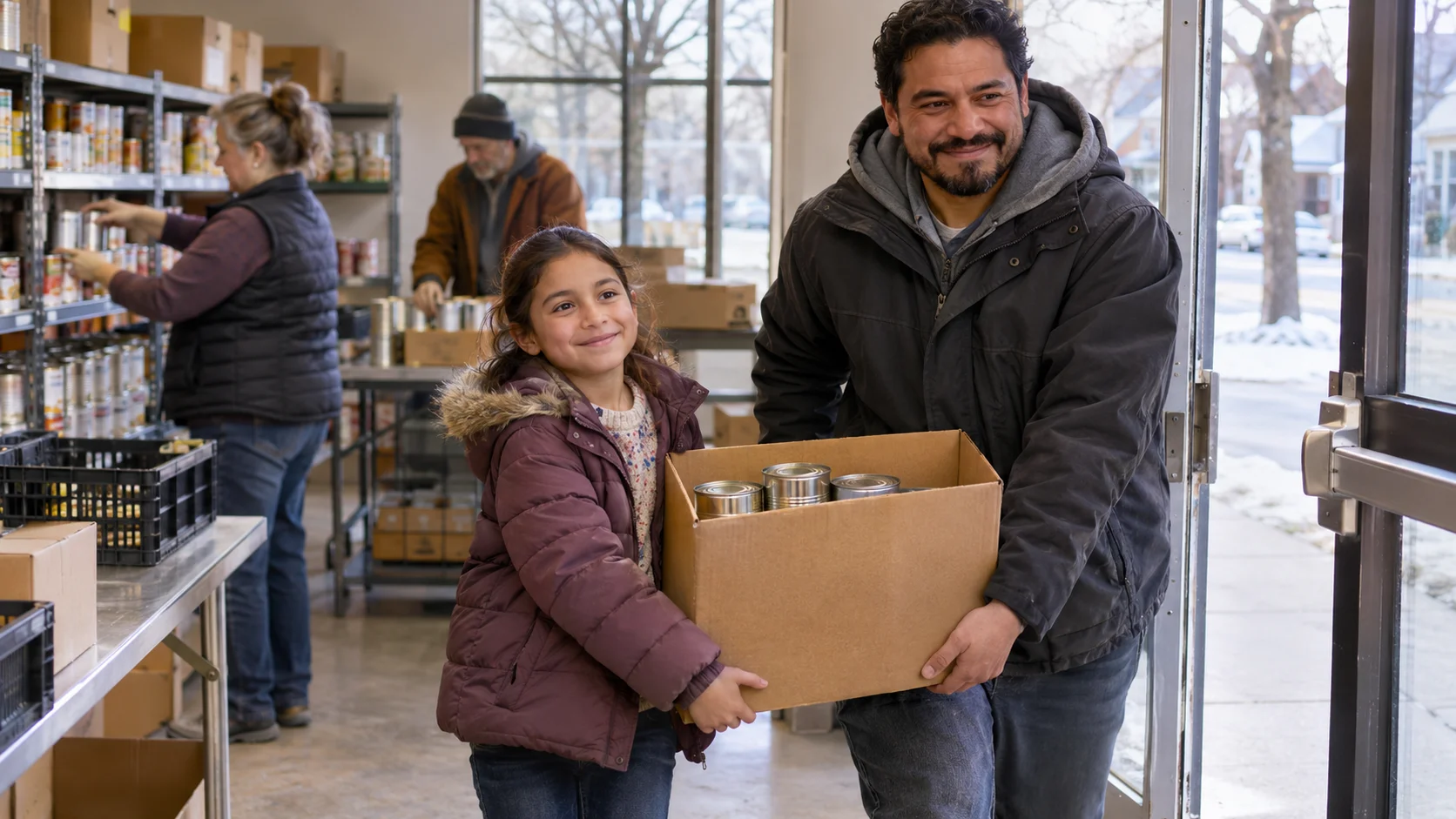
Those categories give every child in a household a way into the day, whatever their age or allowance. A six-year-old may not grasp a donation receipt, but she can sort canned goods, draw a card for a nursing home resident or carry outgrown coats to a collection bin.
The 2013 Women Give study, from the Women's Philanthropy Institute at what is now the IU Lilly Family School of Philanthropy, followed the same 903 children in 2002 to 2003 and 2007 to 2008. Researchers drew on the national Panel Study of Income Dynamics, and the link between parental conversation and children's giving held regardless of a child's sex, age, race or family income.
The study also found that parents who gave to charity without explaining it had less influence than parents who talked it through, according to the university's release. Debra J. Mesch, then director of the institute, called the research "a clear, effective path for parents" hoping to raise generous children.
More than a decade has passed since that data was collected, and children now meet fundraising through livestreams, school drives and crowdfunding pages their parents never saw at that age. What the study measured still translates into a simple household habit, because a child who hears why the family gives absorbs more than one who only watches a check go into an envelope.
In my own house, what stuck was never a lecture but a question my father asked at the kitchen table each December about which neighbors were having a hard year. The answers changed as we got older, from the stray cat on our block to a classmate whose family had lost an apartment, yet the habit of asking stayed with all of us.
The first step this weekend is a 20-minute family meeting, held with phones away and a snack on the table, built around one question for every person in the room. Ask each child what they wish were better in your town or in the world, and write every answer down without judging any of them.
A preschooler may say hungry dogs, a middle schooler may name kids who cannot afford travel soccer, and a teenager may raise climate change or a friend's family in a rough stretch. Our guide to family meetings that hold children's attention shows how a regular check-in can carry decisions like this one without sliding into a sermon.
During Thanksgiving week, pick two or three causes and find local groups working on them, such as a food pantry, a shelter, a youth league with scholarships or a library friends group. Older children can look up what each group does with donations, which opens a natural conversation about why some charities publish annual reports and financial filings while others never do.
Younger kids can help call or email an organization to ask whether it needs volunteers or specific items, a small task that makes the cause feel real to a seven-year-old. The turkey and the travel will crowd that week, so a single half-hour on Sunday or Monday is usually enough to finish the research.
Match each role to a child's age, so a preschooler picks between two pictures of causes and carries the donation bag while an elementary schooler counts coins from a giving jar. Middle schoolers can compare two organizations' websites and present their pick at dinner, which gives them a stake in the outcome and a reason to defend their choice.
Teenagers can take the lead on finding a volunteer shift, emailing the coordinator and arranging rides, a piece of real responsibility that many of them welcome when the cause is one they named themselves. My nephew, who rolled his eyes at the idea at fourteen, ended up organizing a coat drive at his high school two winters in a row once he was the one making the calls.
Before the holiday ends, decide as a family what you will give, whether that means pooling a set amount and letting each child direct a share or committing time instead of money. A morning of service counts fully, and volunteering as a family can double as a weekend outing, a point our sister site made in its look at how volunteer trail work builds bonds.
On Tuesday, Dec. 1, make the donation or drop off the goods together, and if a school and work day makes volunteering impossible, book a shift for the following Saturday instead. Many organizations announce matching gifts on GivingTuesday, so check the charity's own website or social channels that morning for a match that could double what your family gives.
Close the loop afterward by talking about how it felt and what the organization plans to do with the gift. A thank-you note or an update from the charity, read aloud at dinner a few weeks later, turns a single Tuesday into a story your children can retell.
Families stretched by holiday costs sometimes skip GivingTuesday entirely, assuming it belongs to people with money to spare, yet giving on a budget describes how much of the day works. GivingTuesday's own count shows 19.1 million Americans made financial gifts last year, fewer than the 20.9 million who spoke out for a cause, with millions more giving goods or hours.
Writing letters to a local official about a community need, organizing a coat swap among neighbors or raking leaves for an elderly couple down the street all fit the spirit of the day. Children notice quickly when giving gets framed as something only wealthy families do, and a household that shows up with time and attention in a lean year passes along a sturdier lesson.
The strongest family giving habits tend to outlast a single date on the calendar, whether that means a giving jar on the counter year-round or one cause the family serves every quarter. Plenty of households fold service into birthdays and holidays, and GivingTuesday works well as the annual kickoff, when everyone reviews what the family supported last year and chooses what comes next.
The Indiana University researchers measured something modest, which was whether parents talked with their kids about giving at all. Between this weekend and Tuesday, Dec. 1, any family has enough time to hold that conversation, write down a list of causes and show up together.